

Does your business have a distracted driving policy? When employees drive distracted their chance...
Pre-Drive Habits That Keep You Off Your Phone and On the Road
Distracted driving remains one of the biggest threats on the road despite numerous awareness campaigns. Most drivers aren't distracted because they doubt the danger. They're distracted because distraction starts as an impulse, not a decision. And impulses need barriers, not awareness.
A Different Way to Stop Distraction
Even though drivers know the risks of distraction, the phone grab is usually a reflex response to something we didn't solve ahead of time: stress, rushing, boredom, or too many open mental tabs.
Instead of trying to resist distraction in the moment, the smarter move is removing the opportunities for it to interfere while driving.
1. Make your phone a non-factor before departure
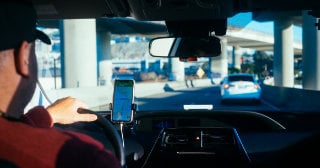
- Switch on Do Not Disturb before driving. Both iOS and the system settings in Android allow pre-set automation, including autoreply options.
- Put the device somewhere inconvenient but accessible if truly needed (center console, glovebox, or a zipped bag). The goal: reachable in an emergency, unreachable for impulse scrolling.
- If you use apps, such as for navigation, music, or podcasts, set them up before you leave. And make sure they will last the whole drive to avoid having to find a new station or title mid-drive.
2. Reduce cognitive noise at the source
Distraction rarely comes out of nowhere. It starts with an open thought loop that demands to be closed right now. Unfortunately, you can’t always control when a “need” thought will pop into your mind so build a system that handles them safely when they happen. “I need to do this” or “I need to remember this”. The instinct for most of us is reaching for a screen to write it down, but this is very dangerous while driving.
Use your voice first. Both Siri and Google Assistant work hands-free, and let you capture thoughts, send messages, or set reminders without touching your phone.
"Call mom when I get home", "Text client I'll arrive in 10 minutes", "Remind me to check the garage door at 6PM", can all be completed without taking your eyes off the road or your hands off the wheel.
Use your smartwatch. Not all of us have success with the voice activation of our phone’s voice command feature.
Pressing a button on a smartwatch is far less disruptive way to activate your phone’s voice command rather than reaching for your phone and reduces the chance of falling into the screen watching habit.
The goal isn't "don't use tech." It's "use tech that doesn't take your hands, eyes, or attention away from driving."
3. Set yourself up for a drive that doesn't ask for the phone
The urge to check a phone has a buildup, even if it feels sudden. It starts when your brain is looking for a quick switch: stimulation, escape, comfort, or any hit of dopamine. This often creeps in as a need to do a quick phone check at traffic lights or stalled traffic but can stick with us once we start moving again.
The trick isn't trying to suppress the impulse. The trick is lowering the conditions that create it.
Do this instead:
- Create your calm before you drive. Take a short moment when you arrive in the driver’s seat, breathe slowly, adjust your mirrors, pick your audio, and let your brain register: I'm here. Nothing pending. Nothing urgent.
- Give yourself plenty of time. Rushing creates invisible pressure. That pressure looks for relief, and screens are the fastest way to escape. When you build extra travel time into your departure, the drive begins in a regulated state instead of a reactive one. This reduces the chance that your brain will seek out your phone.
- Remove the curiosity hooks before driving. Buzzing banners and lock-screen flashes are cues your brain mistakes for "needs attention now”. If nothing is lighting up, there's nothing to pull at you. Most Do Not Disturb functions eliminate this distraction. However, placing the phone where you cannot see the screen can also be effective.
- Give your hands a home base. Hands that have somewhere they need to be are less likely to be holding a phone. Ideally, you’d have both hands firmly on the wheel, but if this is a challenging habit, the gear shift, wheel spokes, or anything else you can grip with your hand without distraction will work.
Shift the Pattern, Reduce the Collisions
When distraction is pre-managed, phone reflexes drop, cognitive load quiets, and the road gets more of your attention by default, not by demand. By taking these small, deliberate steps before you even start driving, you make every drive calmer, more focused, and safer for yourself and everyone sharing the road.